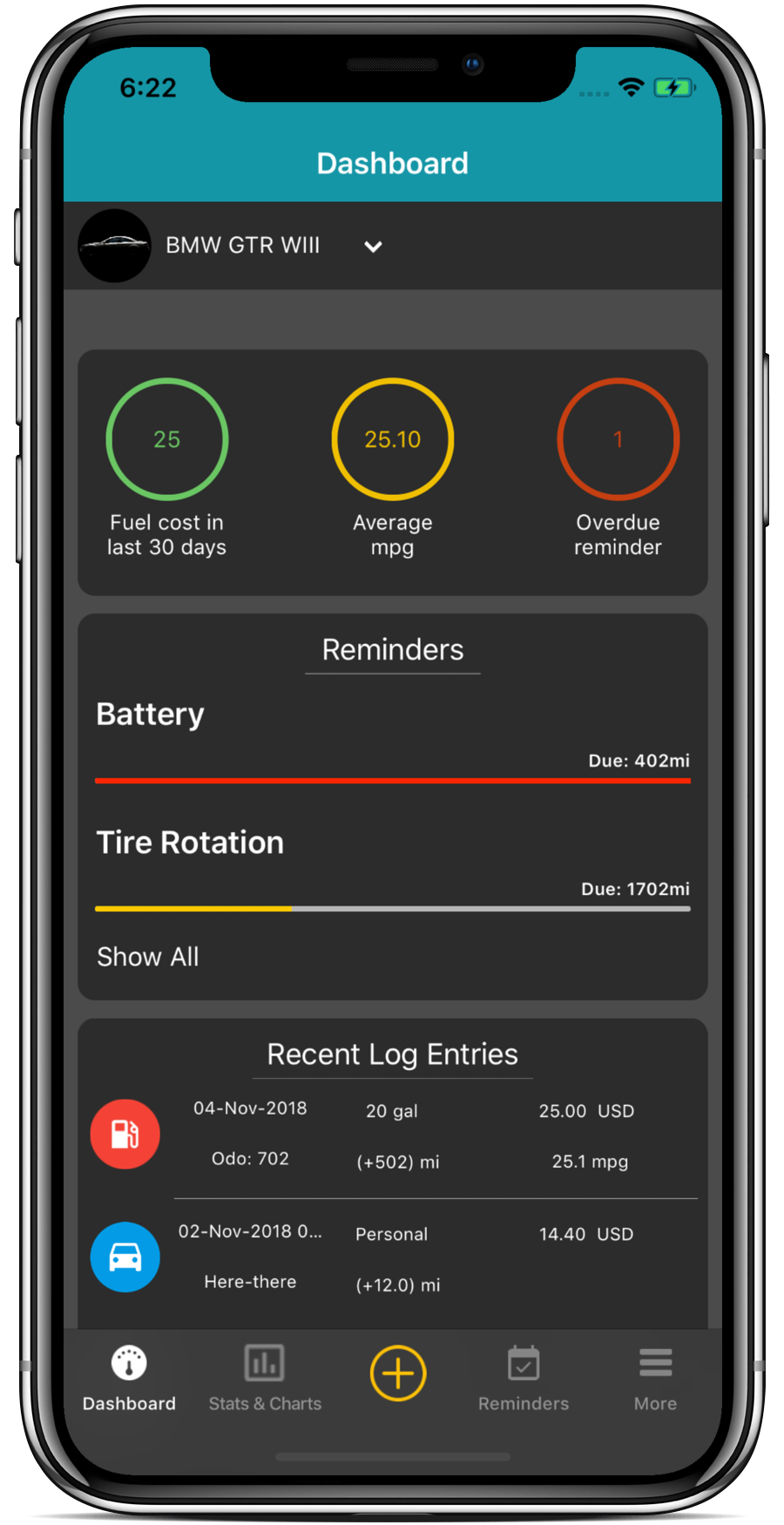
Record fill-ups for all your cars and monitor your car’s efficiency.
Need to track business mileage? Just start auto trip and we will track all your trips in the background whenever you are on the move.
Don’t lose sight of your maintenance and services. Log your services and we will remind you when its due.
Know your vehicle's running costs and plan for your expenses.
Sign into the cloud and get easy access to all your data from anywhere and any device.
Run your reports or schedule them weekly or monthly to know more about your fill-ups , mileage and expenses.
The fusion of represents a paradigm shift from reactive treatment to proactive, holistic wellness. This article explores how understanding the “why” behind an animal’s actions is becoming just as critical as understanding the “how” of its organic functions. The Silent Patient: Why Behavior is the "Sixth Vital Sign" In human medicine, a patient says, “My chest hurts.” In veterinary medicine, the patient says nothing—or worse, it hides its symptoms. This is where behavior becomes diagnostic data.
Veterinary science has begun treating behavior as a vital sign, akin to temperature or heart rate. A sudden change in behavior—a previously friendly cat hiding, a dog growling when touched, a horse refusing to be saddled—is often the first, and sometimes only, indicator of an underlying medical condition. zoofilia pesada com mulheres e animais repack
The intersection is simple: From Fear to Fury: Understanding the Physiological Roots of Aggression When a dog bites a child or a cat lashes out at its owner, the standard societal response is to label the animal "bad" or "dominant." Veterinary behaviorists, however, ask a different set of questions: Is the thyroid functioning correctly? Is there a brain lesion? Is the animal in chronic pain? The Thyroid Connection Hypothyroidism in dogs is notoriously linked to "rage syndrome" or sudden-onset aggression. When thyroid hormones drop, the brain’s serotonin production plummets, lowering the threshold for impulsive aggression. A standard blood panel can diagnose this. Once the dog is placed on synthetic thyroxine, the "aggressive" dog returns to its normal self. Without the marriage of behavior observation and veterinary endocrinology, that dog might have been euthanized. Seizures and Shadow Biting Partial complex seizures—seizures that originate in the temporal lobe—often present not as convulsions, but as bizarre behaviors. A dog might suddenly snap at invisible flies (fly-biting syndrome), chase its tail obsessively, or show unprovoked terror. Veterinary neurology combined with ethology (the study of animal behavior) allows practitioners to treat these episodes with anticonvulsants rather than behavioral modification alone. The Cat in the Carrier: Reducing Stress to Improve Outcomes Perhaps no area demonstrates the need for behavioral integration more than feline medicine. Cats are masters of masking illness—a survival instinct from their wild ancestors. By the time a cat looks sick, it is often critically ill. The fusion of represents a paradigm shift from
By treating the underlying pain, shelters have transformed "unadoptable" aggressive dogs into friendly companions. This intersection saves lives. Finally, the intersection of these fields extends to human mental health. Veterinary science increasingly recognizes "Zoonotic behavior" and the impact of animal behavior on family dynamics. A dog with separation anxiety destroys a living room; a parrot with feather-plucking disorder screams for 12 hours. These behaviors lead to owner burnout, relinquishment, or euthanasia. This is where behavior becomes diagnostic data
For pet owners, the takeaway is clear: When your animal acts out, do not call a trainer first. Call your veterinarian. The root of the problem may not be in the mind—it may be in the body. And only by bridging the gap between can we finally provide true, complete care for the creatures who share our lives. Disclaimer: This article is for informational purposes and does not constitute medical advice. Always consult a licensed veterinarian or a board-certified veterinary behaviorist for behavioral or health concerns.

The fusion of represents a paradigm shift from reactive treatment to proactive, holistic wellness. This article explores how understanding the “why” behind an animal’s actions is becoming just as critical as understanding the “how” of its organic functions. The Silent Patient: Why Behavior is the "Sixth Vital Sign" In human medicine, a patient says, “My chest hurts.” In veterinary medicine, the patient says nothing—or worse, it hides its symptoms. This is where behavior becomes diagnostic data.
Veterinary science has begun treating behavior as a vital sign, akin to temperature or heart rate. A sudden change in behavior—a previously friendly cat hiding, a dog growling when touched, a horse refusing to be saddled—is often the first, and sometimes only, indicator of an underlying medical condition.
The intersection is simple: From Fear to Fury: Understanding the Physiological Roots of Aggression When a dog bites a child or a cat lashes out at its owner, the standard societal response is to label the animal "bad" or "dominant." Veterinary behaviorists, however, ask a different set of questions: Is the thyroid functioning correctly? Is there a brain lesion? Is the animal in chronic pain? The Thyroid Connection Hypothyroidism in dogs is notoriously linked to "rage syndrome" or sudden-onset aggression. When thyroid hormones drop, the brain’s serotonin production plummets, lowering the threshold for impulsive aggression. A standard blood panel can diagnose this. Once the dog is placed on synthetic thyroxine, the "aggressive" dog returns to its normal self. Without the marriage of behavior observation and veterinary endocrinology, that dog might have been euthanized. Seizures and Shadow Biting Partial complex seizures—seizures that originate in the temporal lobe—often present not as convulsions, but as bizarre behaviors. A dog might suddenly snap at invisible flies (fly-biting syndrome), chase its tail obsessively, or show unprovoked terror. Veterinary neurology combined with ethology (the study of animal behavior) allows practitioners to treat these episodes with anticonvulsants rather than behavioral modification alone. The Cat in the Carrier: Reducing Stress to Improve Outcomes Perhaps no area demonstrates the need for behavioral integration more than feline medicine. Cats are masters of masking illness—a survival instinct from their wild ancestors. By the time a cat looks sick, it is often critically ill.
By treating the underlying pain, shelters have transformed "unadoptable" aggressive dogs into friendly companions. This intersection saves lives. Finally, the intersection of these fields extends to human mental health. Veterinary science increasingly recognizes "Zoonotic behavior" and the impact of animal behavior on family dynamics. A dog with separation anxiety destroys a living room; a parrot with feather-plucking disorder screams for 12 hours. These behaviors lead to owner burnout, relinquishment, or euthanasia.
For pet owners, the takeaway is clear: When your animal acts out, do not call a trainer first. Call your veterinarian. The root of the problem may not be in the mind—it may be in the body. And only by bridging the gap between can we finally provide true, complete care for the creatures who share our lives. Disclaimer: This article is for informational purposes and does not constitute medical advice. Always consult a licensed veterinarian or a board-certified veterinary behaviorist for behavioral or health concerns.

Simply Fleet is a simple and affordable software to help you track, monitor and analyse your fleet’s operations.